


Health & Safety Information
Information to help protect your family.
Food Safety
A refrigerator will keep food safely cold for about 4 hours during a power outage if the door remains closed. Keep the refrigerator door closed as much as possible to maintain a safe temperature.
After 4 hours without power, discard perishable foods, such as meat, poultry, seafood, eggs and leftovers. Never rely on the appearance or smell of food to determine whether it is safe to eat, and never taste food to test its safety.
Evaluate each food item separately and use the chart below as a guide.
When in doubt, throw it out!
Health Risks Following Exposure to Floodwaters
When to Seek Medical Attention
You should contact a healthcare provider if you experience any of the following:
Fevers.
Symptoms that do not rapidly improve within 1–2 days.
Any wound that shows signs of infection (increased redness, swelling, or pus).
Please monitor your health for the following risks that can appear in the days following exposure to floodwaters:
1. Wound Care and Skin Infections
Floodwaters and debris carry significant risks for injury and infection!
Wound Care: If you sustained any cuts or abrasions, ensure they are washed immediately with either alcohol or soap and clean water and cleaned twice a day.
Tetanus: Ensure your tetanus vaccinations are up to date, especially if you suffered a puncture wound or deep cut while working in contaminated water.
Infections to Watch For: Be alert for contact dermatitis caused by chemicals or allergens in the water. Cellulitis and deeper skin infections typically peak three-to-four days after a flooding event but can remain a risk for weeks. If a wound becomes increasingly red, painful, or swollen, seek medical attention immediately.
2. Potential Illnesses (Leptospirosis and GI Issues)
Exposure to contaminated water and mud increases the risk of specific diseases.
Leptospirosis: Leptospirosis is a particular concern in flood zones, as it is carried by animals and can cause high fever, headache, chills, muscle aches, abdominal pain, vomiting, jaundice, and red eyes.
Gastrointestinal Illness: Contaminated food or water can lead to gastroenteritis, which causes vomiting, nausea, abdominal pain, and diarrhea.
Fact Sheet on Leptospirosis from Department of Health
3. Respiratory and Environmental Hazards
Mold and Dust: As areas dry out, mold and dust can trigger asthma or COPD exacerbations. If you are entering “musty” smelling buildings or continuing clean-up, it is highly recommended to wear an N95 respirator.
Fact Sheet on Mold and How to Keep it Away from Department of Health
Safety Tips
Personal Protective Equipment (PPE)
Wear Protective Clothing: Always use protective clothing, gloves, and a mask while participating in cleanup activities.
Protective clothing examples: long sleeves, pants, boots, gloves and eye protection.
Respiratory Protection: It is highly recommended to wear an N95 respirator or another high-quality mask when entering any room that smells “musty” or when actively cleaning up debris to protect against dust, mold, and other allergens.
Wound Care and Hygiene
Immediate Treatment: Wash any wounds immediately. Follow this with strict wound care and monitoring for signs of infection.
Tetanus Vaccination: Ensure your tetanus vaccinations are up to date if you are participating in cleanup or have sustained a wound.
Hand Hygiene: Practice frequent hand hygiene and clean all utensils thoroughly to prevent gastrointestinal illnesses.
Environmental and Equipment Safety
Carbon Monoxide Prevention: Never use equipment such as pressure washers or generators inside closed spaces, as this can lead to carbon monoxide poisoning.
Mold Remediation: Be proactive about mold prevention and remediation to avoid respiratory issues like asthma or COPD exacerbations.
Chainsaw Safety Tips: With countless trees and branches torn down by Hurricane Lowell, we are urging residents to cut up their debris with the following chainsaw safety tips in mind.
Examine the tension: determine which side of the tree is under compression and which side is under tension. Cutting the tension-side first could cause an explosive, violent split. Begin your cuts on the compressed side and go about 1/3 of the way through.
Stand on the uphill side: never stand downhill from a log or tree on a slope, as it can roll unpredictably once severed.
Keep a clear work area: remove underbrush, loose branches, and tripping hazards around the log before starting your saw.
Engage the chain brake: always activate the chain brake when walking between cuts or when the saw is idling.
Mold Cleanup and Prevention
Mold can begin growing quickly after flooding and may pose health risks. Follow instructions from local authorities and address mold as soon as possible.
Clean and Dry Safely
Remove floodwater, dirt, and debris. Get wet materials and debris out of the home as soon as it is safe to do so.
Wet mold before cleaning. Lightly spray moldy or mildewed surfaces with a soapy solution to help prevent mold particles from becoming airborne.
Clean and disinfect. Clean surfaces with soap and water, then disinfect with a solution of 1 cup liquid chlorine bleach to 1 gallon of water. Open windows and doors first. Never mix bleach with ammonia or other cleaning products. Follow the product label.
Dry completely. Keep fresh air circulating to speed drying. Materials that are not completely dry may develop mold again.
Keep yourself safe. Wear rubber gloves, safety goggles or glasses, and an N95-rated face mask. Wear rubber or hard-soled boots as appropriate. Wash your hands frequently, and do not eat, drink, or smoke while working in a flooded or moldy home.
What Should Be Discarded?
Some materials cannot be cleaned or disinfected thoroughly and should be removed:
Carpet and carpet padding
Porous materials that cannot be laundered or disinfected
Moldy or mildewed building materials that cannot be thoroughly cleaned and dried
Furnishings and personal belongings that have been wet for 24–48 hours or longer and cannot be safely salvaged
What Can Be Saved?
Clothing and linens: Wash with detergent and dry thoroughly.
Plaster, brick, and concrete block: May be cleaned, disinfected, and completely dried.
Walls: Keep walls open as needed to allow them to dry completely.
When in doubt, prioritize safety and follow guidance from local authorities.
Mental Health Resources
The Hawaii State Department of Health created a dedicated webpage with trusted, health and safety resources for people who were impacted by recent storms. While the page focuses on the Kona Lows, its mental health resources are applicable to anyone experiencing emotional distress following a disaster.
988 Hawaiʻi CARES provides free, confidential support for people experiencing a mental health or substance use crisis. Available 24/7, you can call or text 988 to connect with a trained crisis counselor who can listen, provide support, and help connect you with local resources.
Learn more at hicares.hawaii.gov.
Disaster
Distress Helpline
Call or Text
1-800-985-5990
Multilingual support is available to people experiencing emotional distress related to any national or human-caused disaster. Services include multilingual crisis support services for stress, anxiety, and other depression-like symptoms that are common reactions after a disaster such as severe weather and incidents of mass violence.
Residents in the United States and its territories are welcome to call or text SAMHSA’s Disaster Distress Helpline available 24 hours a day, 7 days a week.
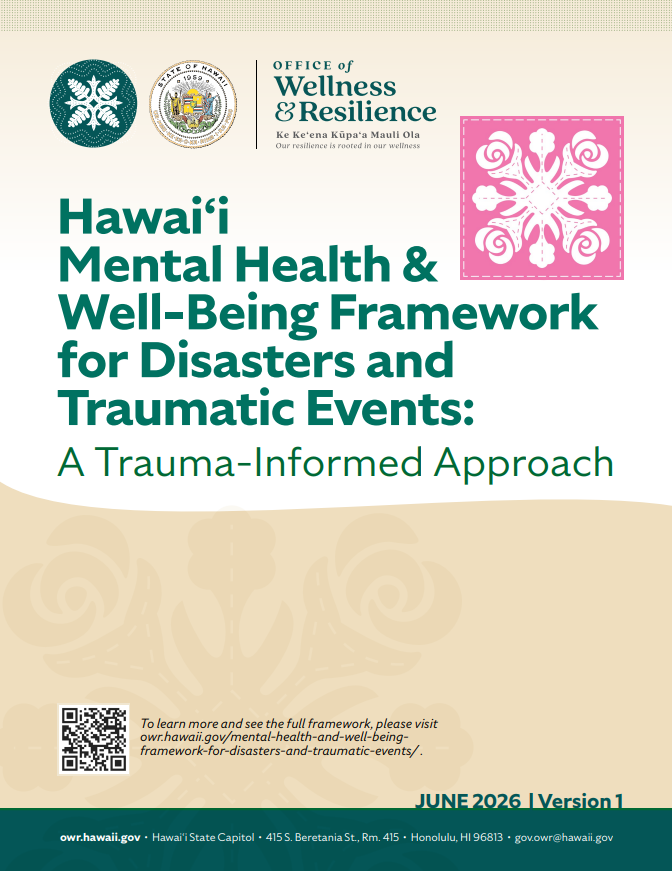
Hawai‘i Mental Health & Well-Being Framework for Disasters and Traumatic Events: A Trauma-Informed Approach
When disaster strikes, mental health support can’t be an afterthought. Hawaiʻi’s first-of-its-kind framework, born from the Maui wildfire response, gives responders, providers, and communities a practical, culturally grounded roadmap for every phase of disaster, from preparing to recovering.
Explore the full report, with 20+ recommendations, training guidance, and real examples.
Pharmacy Information and Hours
Information below was updated as of September 10, 2026. Pharmacy information may change. Please contact the pharmacy directly for the most current information.
Walmart Pharmacy — 808-246-1599, option 1
Costco Pharmacy - (808) 241-4009
Longs Drugs – Līhuʻe — 808-245-8871
Līhuʻe Professional Pharmacy — 808-245-6306
Safeway Pharmacy – Kapaʻa — 808-822-2191, option 2
Longs Drugs – Kapaʻa — 808-822-4918
Longs Drugs – Kōloa — 808-742-0350
Safeway Pharmacy – Līhuʻe
Kaleo's Pharmacy — 808-431-4455
Kawaiola Pharmacy — 808-338-2450, extensions 3 or 2
North Shore Pharmacy — 808-828-1844
Lifeway Pharmacy — 808-245-2471
Beach Safety Reminders
The County is urging residents and visitors to stay out of the ocean following recent heavy rains, especially while a Hawaiʻi Department of Health Brown Water Advisory is in effect. HOSD strongly encourages the public to make informed decisions and prioritize safety while the advisory remains in effect.
Runoff from heavy rains can carry bacteria, pollutants and debris into nearshore waters, creating potential health and safety hazards that may not be visible from shore.
Key Safety Reminders:
Avoid brown or murky water, as it may contain harmful bacteria and contaminants that can cause illness or infection;
Be alert for debris in the water, including floating or submerged objects that can cause injury;
Be mindful of marine life activity, as runoff and debris entering the ocean may attract sharks and other marine life.